Franklin County Dog Registration Information
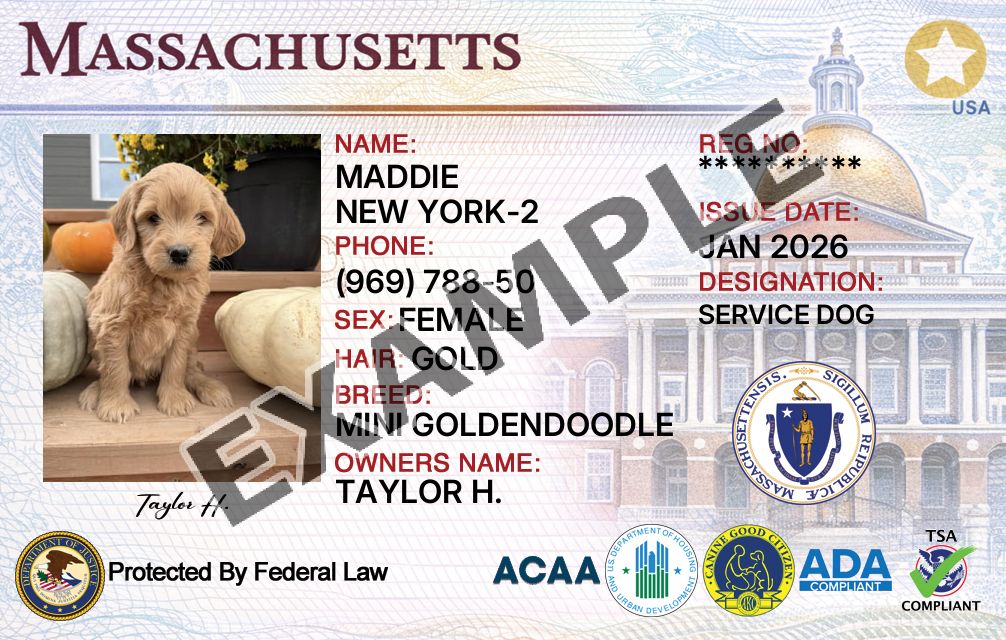
Service Dogs and Emotional Support Animals in Franklin, Massachusetts
If you’re asking where do I register my dog in Franklin County, Massachusetts for my service dog or emotional support dog, the most important thing to know is that “registration” usually means a local dog license. In Franklin County, Massachusetts, dog licensing is typically handled by the city or town where you live—not by a countywide licensing office. That means the place to start is your local Town Clerk (or City Clerk) for your community, plus the local or regional animal control program that supports rabies and dog control enforcement.
This page explains how a dog license in Franklin County, Massachusetts works, what rabies documents are required, and how licensing differs from a dog’s service animal status or emotional support animal (ESA) status.
Where to Register or License Your Dog in Franklin County, Massachusetts
Because licensing is handled locally, contact the office for the town or city where you live. Below are several example official offices within Franklin County, Massachusetts that residents commonly use to obtain or renew a local dog license. If your town is not listed, look for your community’s Town Clerk/City Clerk office (often inside Town Hall/City Hall).
Town of Deerfield — Town Clerk
- Address: 8 Conway Street
- City/State/ZIP: South Deerfield, MA 01373
- Phone: (413) 665-1400 ext. 100
- Email: Not listed on the referenced office page
- Office hours: Not listed on the referenced office page
Town of Bernardston — Town Clerk (Dog Licensing)
- Address: 38 Church Street (PO Box 504)
- City/State/ZIP: Bernardston, MA 01337
- Phone: (413) 648-5401
- Email: townclerk@townofbernardston.org
- Office hours: Not listed on the referenced pages
Town of Shelburne — Town Hall / Town Offices (for Town Clerk services)
- Address: 51 Bridge Street
- City/State/ZIP: Shelburne, MA 01370
- Phone: Not listed on the referenced town homepage
- Email: Not listed on the referenced town homepage
- Office hours: Not listed on the referenced town homepage
Franklin County Sheriff’s Office — Regional Dog Control / Animal Control Program
- Street address: Not listed on the referenced program page
- City/State/ZIP: Not listed on the referenced program page
- Phone: Not listed on the referenced program page
- Email: animalcontrol@fcso-ma.us
- Office hours: Not listed on the referenced program page
Overview of Dog Licensing in Franklin County, Massachusetts
Dog licensing is required and handled locally
In Massachusetts, dog licensing is governed by state law, but licenses are issued by the local licensing authority in the city or town where the dog lives. In practical terms, that usually means the Town Clerk or City Clerk. So if you’re searching for where to register a dog in Franklin County, Massachusetts, the correct answer is: register (license) your dog with your local town/city clerk’s office for the municipality where you reside.
Rabies vaccination proof is typically required
A licensing authority generally cannot issue a dog license unless the owner provides a veterinarian’s certification that the dog has been vaccinated against rabies (or documentation that the dog is exempt under the applicable rules). This means most offices will require a current rabies certificate (or an exemption letter) before they can issue the license tag.
What you get when you license your dog
After you apply and pay the local licensing fee (and provide the required documents), the town/city typically issues:
- A dog license record in the local clerk’s system
- A license tag for the dog’s collar
- Renewal instructions (often annual, though timing can vary by town policy)
How Dog Licensing Works Locally in Franklin County, Massachusetts
Step 1: Identify your licensing office (your town/city)
Franklin County includes many towns, and each one can have its own local workflow for issuing dog licenses. Start by identifying your municipality (for example: Deerfield, Bernardston, Shelburne, Greenfield, Montague, etc.) and then contact the Town Clerk/City Clerk to confirm:
- Where and how to apply (in person, by mail, or online if offered)
- Accepted forms of payment
- Deadlines and late fees
- Whether you need proof of spay/neuter for fee discounts
Step 2: Gather required documentation
Many Franklin County communities ask for the same core items before issuing a license. The most common requirement is current rabies vaccination proof. Your town may also request identification or proof of residency, especially for first-time licenses.
If your dog is a service dog or emotional support dog, you generally still provide the same baseline items for the local license. Service dog/ESA status does not usually replace rabies documentation for licensing.
Step 3: Apply and receive your tag
Once approved, your local office issues the license and tag. Keep the tag on your dog’s collar when required by local rules. If the tag is lost, contact the licensing authority to request a replacement.
Step 4: Renew on time
Many Massachusetts communities run licensing on an annual schedule and assess late fees if you renew after the local deadline. Because dates can vary by town, verify your exact renewal window with your local clerk’s office.
Service Dog Laws in Franklin County, Massachusetts
Service dogs are not “registered” through dog licensing
A dog license in Franklin County, Massachusetts is a local public health/animal control tool. A service dog, by contrast, is defined by disability-related laws that govern where the dog may accompany a person and what questions staff may ask. In other words: licensing is about the dog living in your town; service dog status is about the dog’s function and training to assist a person with a disability.
What makes a dog a service dog
Generally, a service dog is a dog that is individually trained to do work or perform tasks for a person with a disability (for example: guiding, alerting, retrieving items, interrupting panic behaviors, or other trained tasks). Service dogs are different from pets and different from emotional support animals because they are trained to perform specific disability-related tasks.
Public access vs. licensing
Even if your dog is a service dog, you usually still follow your town’s licensing process (including rabies requirements). The service dog laws address access to public places; the local licensing rules address local registration, rabies compliance, and animal control enforcement.
Emotional Support Animal Rules in Franklin County, Massachusetts
An ESA is not the same as a service dog
An emotional support animal (ESA) provides comfort or emotional support, but ESAs are generally not trained to perform specific tasks in the way service dogs are. Because of that difference, ESAs typically do not have the same public access rights as service dogs.
Housing rules and documentation are separate from dog licensing
If your dog is an ESA, you may have rights related to housing accommodations depending on the situation and applicable housing laws. However, that housing documentation is separate from your local dog license. Your town clerk’s office is usually focused on licensing requirements like rabies vaccination proof, payment, and local recordkeeping—not ESA letters.
Do ESAs still need a local license?
In most cases, yes. If the dog lives in a Franklin County town, it is typically expected to be licensed in that town if it meets age and residency requirements. If you are unsure, ask your local clerk’s office directly: “Do you license ESAs the same way as other dogs?” (Most towns do.)
Frequently Asked Questions
Disclaimer: Licensing requirements and office locations may change. Residents should verify details with their local animal services office within Franklin County, Massachusetts.
Register A Dog In Other Massachusetts Counties
Select your county below to get started with your dog’s ID card. Requirements and license designs may vary by county, so choose your location to see the correct options and complete your pup’s registration.
- Barnstable County Dog Registration
- Berkshire County Dog Registration
- Bristol County Dog Registration
- Dukes County Dog Registration
- Essex County Dog Registration
- Hampden County Dog Registration
- Hampshire County Dog Registration
- Middlesex County Dog Registration
- Norfolk County Dog Registration
- Plymouth County Dog Registration
- Suffolk County Dog Registration
- Worcester County Dog Registration